

Industrial Laser Distance Sensor for Bridge Monitoring: Improving Structural Safety with Real-Time Measurement
Bridges are among the most critical components of transportation infrastructure. Every day, they withstand constant traffic loads, environmental stress, temperature fluctuations, wind forces, and natural aging. Even small structural changes can develop into significant safety concerns if they are not detected early.
To ensure long-term reliability and safety, engineers increasingly rely on advanced structural health monitoring systems. One of the most effective technologies used today is the industrial laser distance sensor, which provides highly accurate, non-contact measurements for bridge displacement, deformation, and movement monitoring.

In this article, we explore how industrial laser distance sensors are used in bridge monitoring and why the LDL-T Laser Distance Sensor offers an ideal solution for demanding infrastructure applications.
Why Bridge Monitoring Is More Important Than Ever
Modern bridges are designed to last for decades, but their condition can gradually change due to:
- Heavy traffic loads
- Thermal expansion and contraction
- Wind-induced vibration
- Material fatigue
- Foundation settlement
- Earthquakes and seismic activity
- Corrosion and aging
Traditional inspection methods often require manual measurements, temporary road closures, or periodic site visits. While these methods remain valuable, they cannot provide continuous real-time data.
Bridge operators now prefer automated monitoring systems that can continuously track structural movement and provide early warnings when abnormal behavior occurs.
The Role of Industrial Laser Distance Sensors in Bridge Monitoring
An industrial laser distance sensor measures the distance between the sensor and a target surface using laser technology. By continuously recording distance changes, engineers can accurately determine:
Bridge Deflection
Bridge decks naturally bend under traffic loads. Monitoring deflection helps engineers verify that the structure remains within safe design limits.
Structural Displacement
Long-term displacement may indicate foundation movement, material fatigue, or structural deterioration.
Expansion Joint Movement
Bridges expand and contract as temperatures change. Laser sensors provide precise measurements of these movements without physical contact.
Vibration Monitoring
High-frequency measurements allow engineers to observe bridge vibrations caused by traffic, wind, or environmental factors.
Load Testing
During bridge commissioning or maintenance inspections, laser sensors can monitor structural behavior under controlled loads.
Advantages of Laser Distance Sensors Over Traditional Monitoring Methods
Non-Contact Measurement
Unlike contact-based sensors, laser distance sensors do not require physical attachment to moving structural components. This reduces installation complexity and maintenance requirements.
High Measurement Accuracy
Bridge monitoring often requires millimeter-level precision. Laser sensors can detect very small structural changes that may not be visible during routine inspections.
Long-Term Stability
Industrial-grade sensors are designed for continuous operation in challenging outdoor environments.
Fast Data Acquisition
High-speed measurement allows engineers to capture dynamic structural behavior that slower monitoring systems may miss.
Easy System Integration
Modern sensors can be integrated into data acquisition systems, PLCs, remote monitoring platforms, and IoT-based structural health monitoring networks.
Why the LDL-T Laser Distance Sensor Is Suitable for Bridge Monitoring
The LDL-T Laser Distance Sensor was developed for high-precision industrial measurement applications where reliability and accuracy are essential.
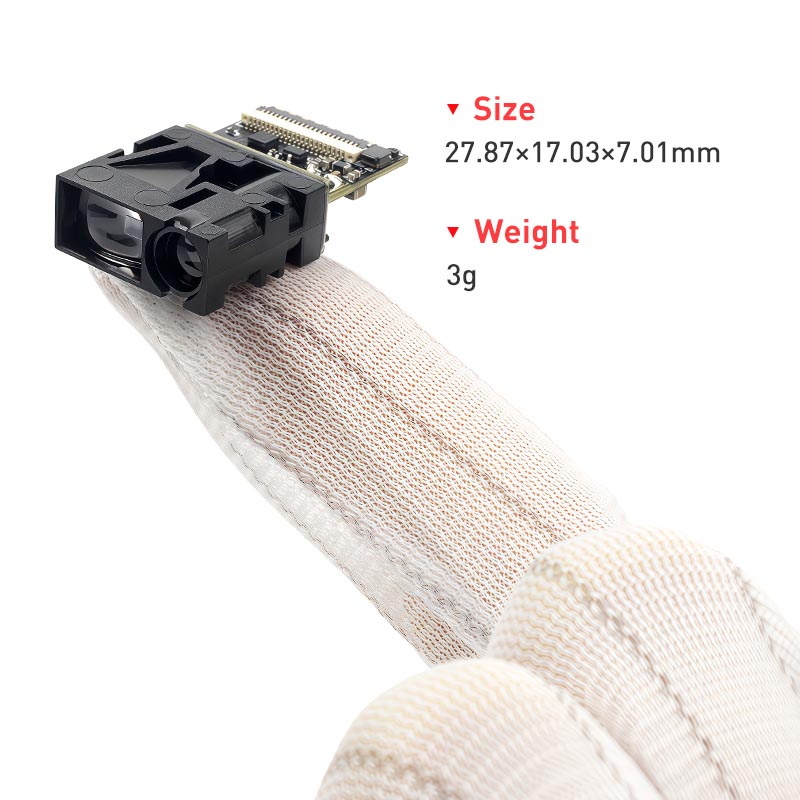
Key specifications include:
| Parameter | LDL-T Specification |
|---|---|
| Measuring Range | 0.03m – 100m |
| Accuracy | Up to ±1mm |
| Measurement Frequency | Up to 100Hz |
| Output Interfaces | UART, RS232, RS485, Modbus |
| Laser Options | Red Laser / Green Laser |
| Compact Size | 27.87mm*16.57mm*7.01mm |
| Weight | Approximately 3g |
These characteristics make the LDL-T particularly suitable for bridge monitoring systems that require continuous, accurate displacement measurement.
Monitoring Bridge Deflection with LDL-T
One common application involves installing the sensor on a fixed support structure while directing the laser toward a reference point on the bridge deck.
As vehicles pass across the bridge, the deck experiences temporary deflection. The LDL-T continuously measures the distance change between the sensor and the target surface.
Because the sensor delivers up to ±1mm accuracy, engineers can capture subtle structural movement with exceptional precision.
The resulting data can be used to:
- Verify structural performance
- Compare actual behavior with design models
- Detect abnormal displacement patterns
- Support preventive maintenance planning
Capturing Dynamic Bridge Vibrations at 100Hz
Bridges are dynamic structures that constantly respond to external forces.
Wind loads, vehicle traffic, and environmental conditions can generate vibrations that affect structural performance.
The LDL-T supports measurement frequencies of up to 100Hz, allowing engineers to collect detailed displacement data in real time.
This higher sampling rate provides several benefits:
- Improved vibration analysis
- Better understanding of dynamic behavior
- More accurate structural health assessments
- Earlier detection of developing issues
For modern monitoring systems, high-frequency data collection is increasingly important as infrastructure owners move toward predictive maintenance strategies.
Integration with Structural Health Monitoring Systems
Modern bridge monitoring projects often require sensors to communicate with centralized monitoring platforms.
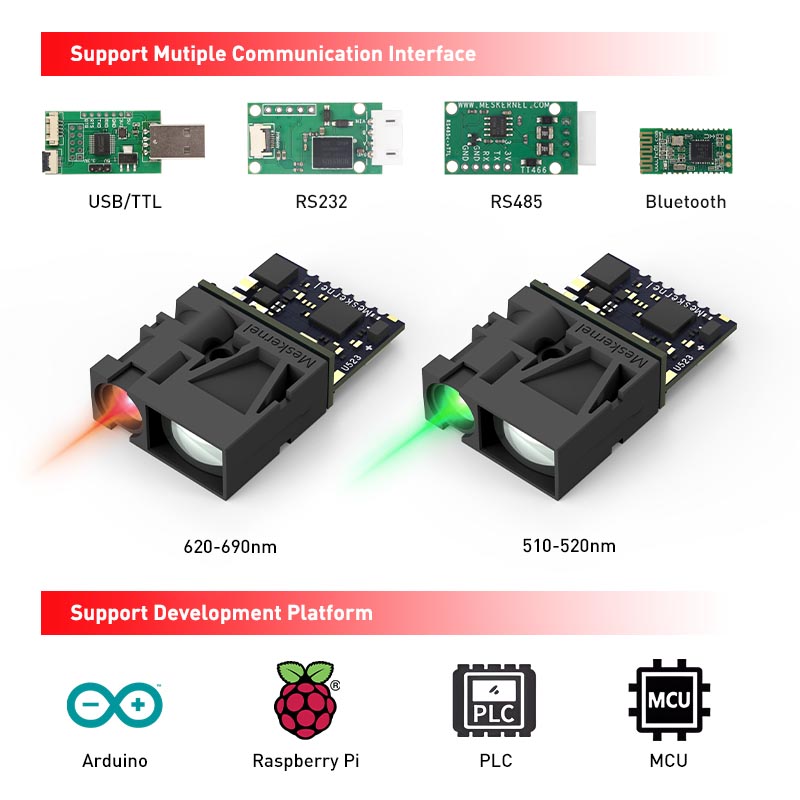
The LDL-T supports multiple industrial communication interfaces, including:
- RS485
- RS232
- UART
- Modbus
This flexibility allows the sensor to be integrated into:
- Remote monitoring stations
- Industrial PLC systems
- Data loggers
- Edge computing devices
- Smart infrastructure platforms
- Cloud-based monitoring systems
Engineers can combine laser measurement data with other monitoring technologies such as accelerometers, strain gauges, weather stations, and tilt sensors to create comprehensive structural health monitoring solutions.
Benefits for Infrastructure Owners
Deploying industrial laser distance sensors for bridge monitoring offers significant operational advantages:
Enhanced Public Safety
Continuous monitoring helps identify structural changes before they become serious safety risks.
Reduced Inspection Costs
Automated measurement reduces the need for frequent manual inspections.
Data-Driven Maintenance
Real-time information enables maintenance teams to prioritize repairs based on actual structural conditions.
Longer Infrastructure Lifespan
Early detection of problems helps prevent costly damage and extends bridge service life.
Improved Regulatory Compliance
Monitoring systems provide documented performance data that can support inspection and compliance requirements.
Future Trends in Bridge Monitoring
As transportation infrastructure becomes increasingly connected, bridge monitoring systems are evolving toward:
- Smart infrastructure networks
- Remote condition monitoring
- Predictive maintenance
- AI-assisted structural analysis
- Cloud-based asset management
High-precision laser measurement technology will continue to play a key role in these developments, providing reliable real-time data for informed decision-making.
Conclusion
Bridge monitoring requires accurate, reliable, and continuous measurement solutions capable of detecting even the smallest structural changes. An industrial laser distance sensor offers significant advantages over traditional measurement methods by providing non-contact, high-precision displacement monitoring.
With up to ±1mm accuracy, measurement frequencies reaching 100Hz, compact dimensions, and flexible industrial communication interfaces, the LDL-T Laser Distance Sensor is an excellent choice for bridge deflection monitoring, displacement measurement, vibration analysis, and long-term structural health monitoring applications.
As infrastructure owners increasingly adopt smart monitoring technologies, high-performance laser distance sensors will remain essential tools for ensuring bridge safety, reliability, and operational efficiency.