

How Robots Detect Elevator Floors Without API Access
As service robots become increasingly common in hotels, hospitals, and office buildings, one of the biggest technical challenges remains unsolved: how can robots accurately detect elevator floors without access to elevator control systems?
In many real-world environments, robots are not allowed to connect to elevator APIs due to security restrictions or legacy infrastructure. This creates a critical gap in robot navigation, especially when vertical movement between floors is required.
In this article, we explore how modern robots overcome this limitation using innovative sensing technologies, enabling reliable robot elevator navigation without system integration.
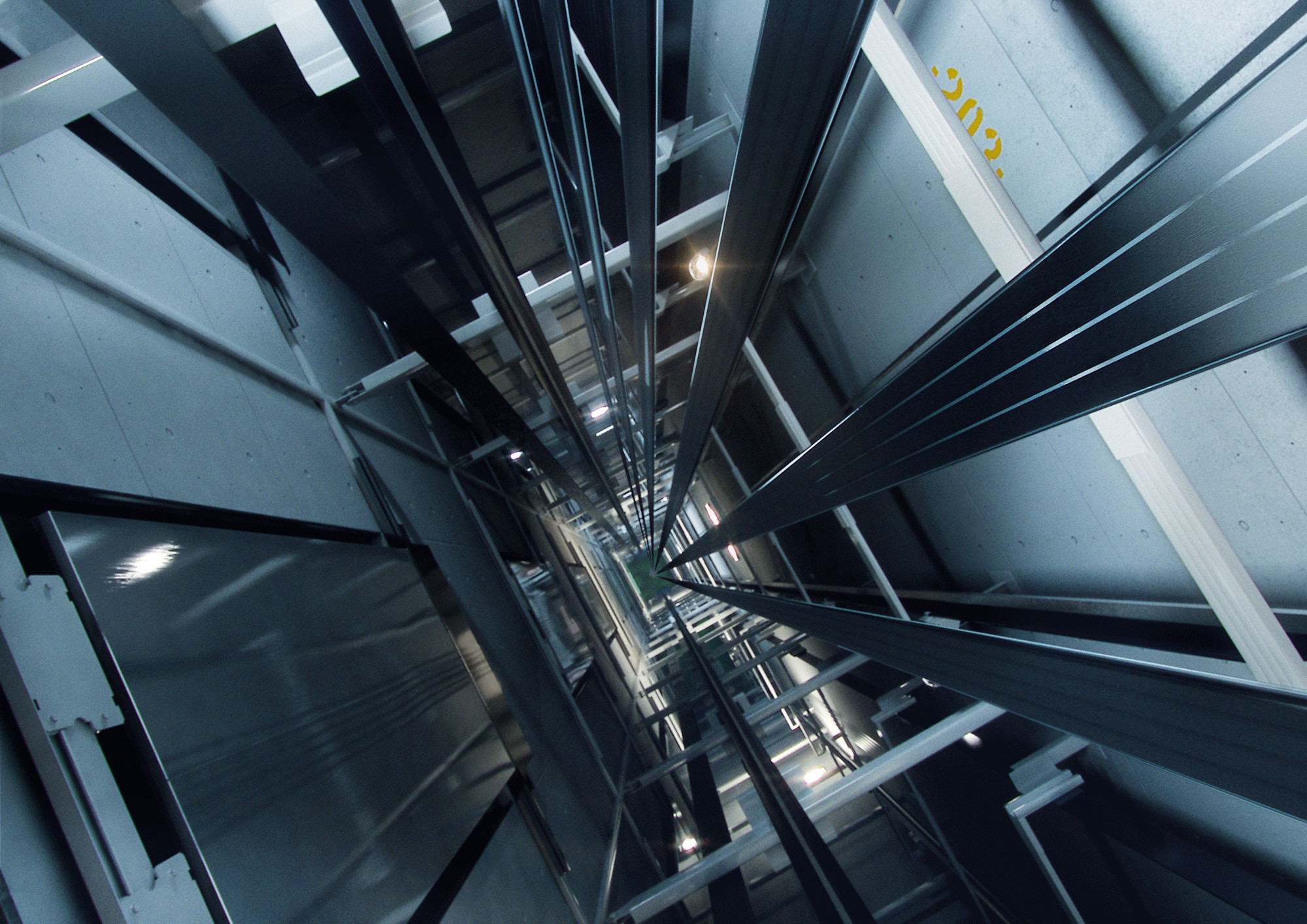
Why Elevator Access Is a Challenge for Robots
For robots operating in multi-floor buildings, elevators are essential. However, accessing elevator data is often not feasible.
Common limitations include:
- Restricted API access from building management
- Lack of standardized communication protocols
- High integration costs for each deployment
- Compatibility issues with older elevator systems
Without reliable access to floor data, robots cannot determine their vertical position, making elevator floor detection without API a critical problem to solve.
Traditional Approaches and Their Limitations
Several methods have been explored to address elevator positioning, but each has its drawbacks.
Vision-Based Systems
Cameras can detect floor indicators inside elevators, but performance depends heavily on lighting conditions and visibility.
Wireless Positioning (RFID/Bluetooth)
These systems require infrastructure deployment across floors, increasing cost and maintenance complexity.
Elevator System Integration
While accurate, this approach depends on API access, which is often unavailable.
These limitations highlight the need for a more flexible and independent elevator positioning solution.
A Smarter Approach: Distance Sensor-Based Floor Detection
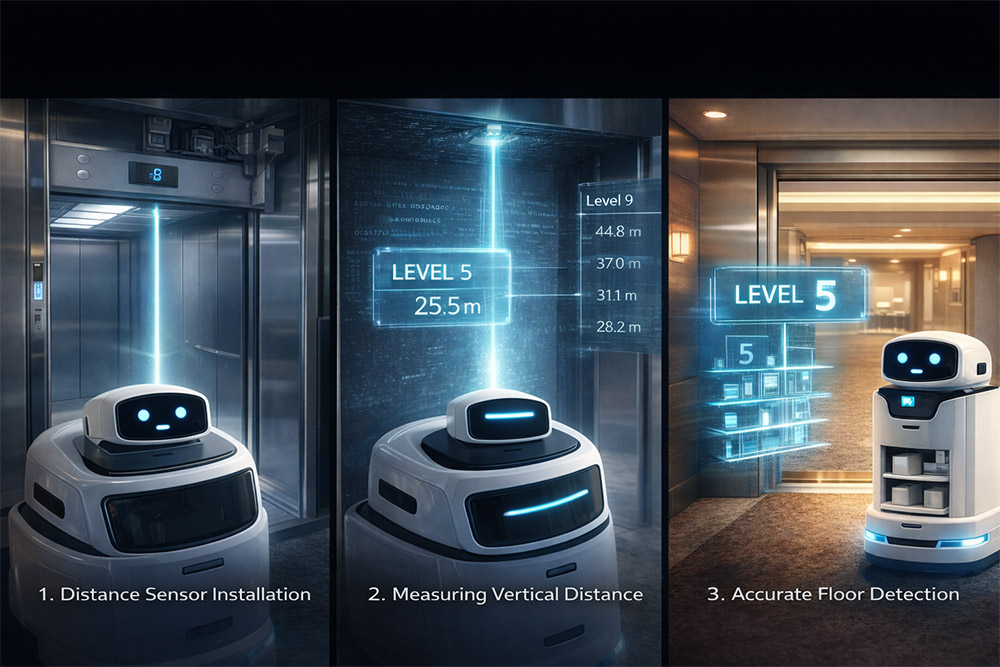
A more practical solution is to use a distance sensor for robots to measure vertical movement inside the elevator.
How It Works
- A distance sensor is installed on the robot or inside the elevator cabin
- The sensor measures the distance to a fixed reference point (e.g., ceiling of the shaft)
- As the elevator moves, the measured distance changes continuously
- Each floor corresponds to a specific distance value
By mapping these values, robots can perform accurate elevator floor detection without API.
Advantages of Distance Sensor-Based Elevator Detection
Using a distance sensor offers several benefits over traditional methods:
Independence from Infrastructure
No need to connect to elevator systems or install additional hardware in the building.
High Accuracy
Modern sensors provide millimeter-level precision, ensuring reliable floor identification.
Real-Time Operation
Continuous measurement allows instant detection of floor changes.
Scalability
The solution can be deployed across different buildings without customization.
Recommended Sensor for Robot Elevator Navigation
For this application, a high-performance sensor is required to ensure stability and accuracy.
The LDJ laser distance sensor is an excellent choice for robot elevator navigation due to its advanced capabilities:
- Measurement range up to 200 meters
- Accuracy of ±3 mm
- Strong resistance to indoor environmental interference
- Compact size for easy integration into robotic systems
With these features, it provides a reliable foundation for elevator floor detection without API in real-world deployments.
Real-World Applications
This technology is already being used in a variety of industries:
Hospitality
Delivery robots in hotels use distance sensors to navigate elevators independently.
Healthcare
Robots transport medical supplies between floors in hospitals.
Commercial Buildings
Automation systems improve efficiency in office environments.
Retail
Service robots operate across multiple levels in shopping centers.
These applications demonstrate how robot elevator navigation can be achieved without relying on traditional infrastructure.
Implementation Tips
To successfully deploy this solution, consider the following:
- Calibrate the sensor with a known reference distance
- Define floor height intervals accurately
- Ensure stable sensor mounting
- Use reliable data processing algorithms
With proper setup, a distance sensor for robots can deliver consistent and accurate results.
The Future of Indoor Robot Navigation
As automation continues to expand, flexible and scalable solutions will become increasingly important. Technologies that do not rely on system integration—such as distance-based sensing—will play a key role in enabling widespread adoption.
By solving the challenge of elevator floor detection without API, robots can operate more independently and efficiently in complex indoor environments.
Conclusion
Detecting elevator floors without API access is a major challenge in robotics, but it is no longer an unsolved problem. With the use of advanced sensing technologies, especially distance-based solutions, robots can achieve reliable and accurate positioning.
For developers and integrators, adopting a distance sensor for robots provides a practical and scalable path toward fully autonomous indoor navigation.