

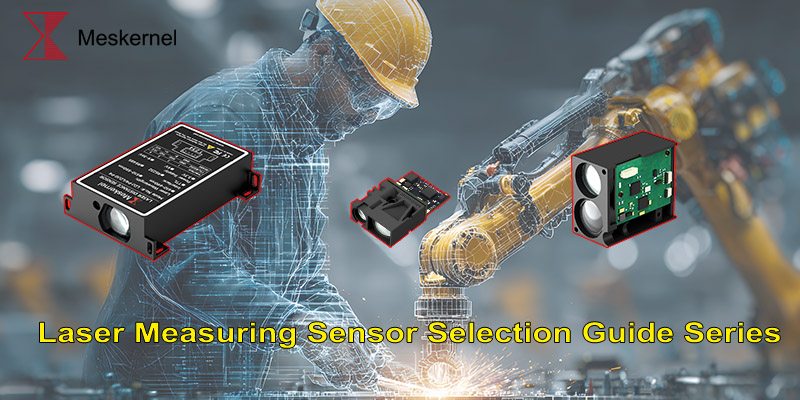
Laser Measuring Sensor Selection Guide Series
However, the market offers a wide range of laser distance sensors and laser rangefinder modules, each optimized for different scenarios. Selecting the right solution is not about choosing the most advanced specification, but about matching sensor performance with actual operating conditions and system requirements.
This article, part of the Laser Measuring Sensor Selection Guide Series, takes a practical, application-oriented approach to help engineers and system integrators make informed decisions.
From Measurement Principle to Application Fit
At a fundamental level, a laser measuring sensor determines distance by transmitting a laser beam and analyzing the reflected signal. The way this signal is processed defines the sensor’s strengths and limitations.
Phase-based laser distance measurement sensors are designed for short to medium ranges where high precision and repeatability are critical. These sensors are commonly used in industrial automation, precision alignment, and robotic feedback systems.
In contrast, pulse or time-of-flight (ToF) laser rangefinder modules are optimized for long-distance detection, where the ability to measure tens or hundreds of meters outweighs the need for millimeter-level accuracy. These solutions are widely applied in outdoor monitoring, large-scale positioning, and infrastructure measurement.
Understanding this distinction early in the selection process helps avoid performance mismatches and unnecessary system complexity.
Accuracy Is a Requirement, Not a Competition
Precision is often the first parameter engineers look at—but higher accuracy does not always translate to better system performance.
A high accuracy laser distance measurement sensor, typically offering ±1 mm precision, is ideal for applications such as:
-
Automated assembly and positioning
-
Conveyor alignment and height detection
-
Robotic arm feedback control
-
Precision material handling
However, these sensors may require controlled conditions, including stable mounting, consistent target surfaces, and limited ambient interference. For applications where tolerances are wider, selecting ultra-high precision may increase cost without delivering meaningful benefits.
The goal is not maximum accuracy, but sufficient accuracy with long-term stability.
Measuring Range Defines Sensor Architecture
Distance range directly impacts both sensor design and measurement reliability.
-
Short-range sensors excel in compact systems with tight precision demands.
-
Medium-range sensors balance accuracy and coverage for indoor logistics and automation.
-
Long distance measuring sensors prioritize signal strength and environmental robustness over fine resolution.
Applications such as warehouse monitoring, outdoor level measurement, and smart transportation systems often rely on laser rangefinder sensors or modules that can maintain consistent readings across extended distances.
In many cases, integrating a laser rangefinder module into a customized system provides greater flexibility in optical design, enclosure layout, and signal processing.
Environmental Adaptability Matters More Than Specifications
A sensor that performs well in laboratory conditions may struggle in real-world environments. When evaluating a laser measuring sensor, environmental adaptability should be treated as a primary selection factor.
Key considerations include:
-
Exposure to dust, vibration, or moisture
-
Operation under strong ambient light or direct sunlight
-
Temperature variation in industrial or outdoor settings
-
Target surface color, texture, and reflectivity
For outdoor or harsh environments, long distance measurement sensors with enhanced optical filtering and stable algorithms provide more reliable results. Indoor automation systems, on the other hand, benefit from high repeatability and fast response times.

Communication Interfaces and Control Compatibility
Modern laser distance sensors are typically part of a larger control architecture. Seamless data communication is essential for system reliability and scalability.
Commonly supported interfaces include:
-
UART / TTL for embedded systems
-
RS232 and RS485 for industrial controllers
-
USB for testing and configuration
-
Modbus for PLC-based automation
-
Analog outputs for legacy systems
A laser rangefinder module is often the preferred choice for developers working with Arduino, Raspberry Pi, ESP32, or custom control boards, offering both compact size and flexible integration options.
Mechanical Constraints: Size, Weight, and Power
In mobile and space-constrained platforms—such as autonomous robots, drones, or portable instruments—mechanical factors are just as important as optical performance.
A compact laser measuring sensor with low power consumption enables:
-
Longer operating time
-
Reduced thermal load
-
Greater freedom in system layout
Laser rangefinder modules are especially well-suited for these applications, delivering reliable distance data while minimizing system footprint.
A Practical, Application-Driven Selection Method
Rather than selecting sensors based on isolated specifications, successful projects follow an application-first strategy:
-
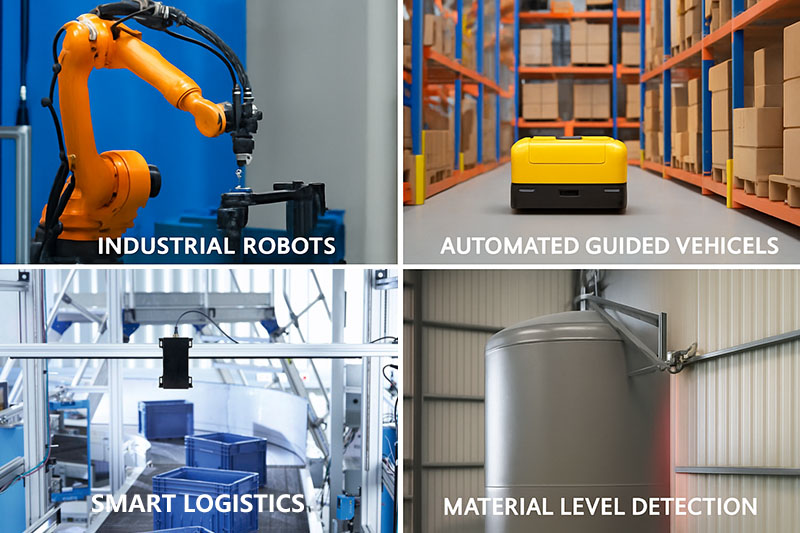
Industrial automation focuses on accuracy, repeatability, and signal stability
-
Logistics and warehousing require balanced range, speed, and durability
-
Outdoor monitoring emphasizes long distance capability and environmental resistance
-
Embedded development benefits from modular designs and flexible interfaces
By aligning sensor capabilities with real operational demands, engineers can reduce system risk, simplify integration, and optimize overall cost.
Final Thoughts
Choosing the right laser measuring sensor is a strategic engineering decision, not a simple specification comparison. Accuracy, range, environment, communication, and physical constraints must all be evaluated together.
Whether deploying a high accuracy laser distance measurement sensor for precision automation or a long distance measuring sensor for outdoor infrastructure, a clear understanding of application needs is the key to long-term performance and reliability.
As intelligent sensing technologies continue to evolve, laser measuring sensors and laser rangefinder modules will remain foundational components in the next generation of automation and smart systems.