

How Laser Distance Sensors Enhance Safety and Automation in Modern Forklifts
In modern logistics and warehouse operations, laser distance sensors have become an essential technology for improving the efficiency, accuracy, and safety of forklifts. As global supply chain standards continue to increase, more manufacturers and automation integrators are adopting high-precision laser distance measurement systems to support intelligent forklift solutions.
This article explores how laser distance sensors work in forklifts, their key advantages, and the most common industrial applications.
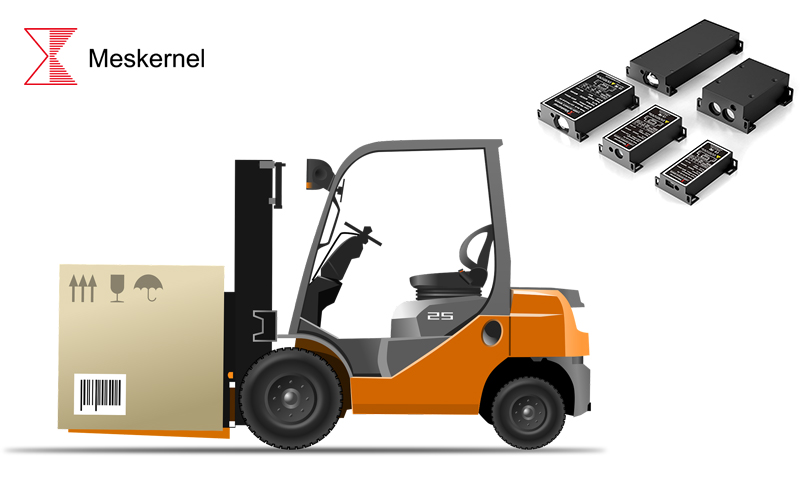
1. Why Forklifts Need Laser Distance Sensors
Traditional forklifts rely heavily on manual operation, which leads to potential risks such as inaccurate pallet positioning, collision hazards, and inefficient loading/unloading processes. The introduction of laser distance sensors for forklifts solves these issues by providing real-time, high-accuracy distance data.
Key reasons include:
-
Improved driving safety through obstacle detection and distance monitoring
-
Higher positioning accuracy for pallet entry and cargo stacking
-
Enhanced automation for AGV forklifts and unmanned warehouse vehicles
-
Better efficiency in narrow aisles and high-rack warehouse environments
2. How Laser Distance Sensors Work on Forklifts
Laser distance sensors use time-of-flight (ToF) or phase-shift measurement principles to detect distances ranging from a few centimeters to hundreds of meters. When mounted on forklifts, the sensor continuously measures the distance between the vehicle and surrounding objects, shelves, or pallets.
Common integration methods include:
-
Front-mounted obstacle detection
-
Side-mounted aisle guidance
-
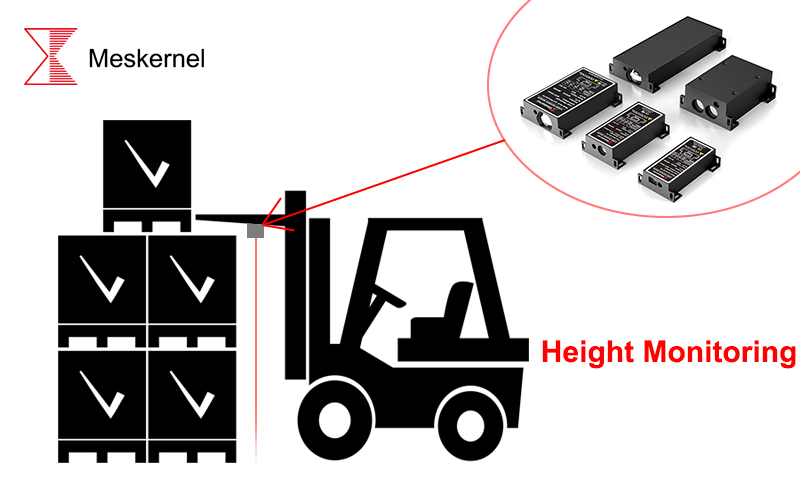
Height measurement for fork elevation control
-
Rear-mounted anti-collision sensors
-
2D and 3D scanning sensors for autonomous forklifts
With millimeter-level precision, operators and automated systems can greatly improve handling accuracy and safety.
3. Main Applications of Laser Distance Sensors in Forklifts
One of the most widely adopted uses is forklift collision avoidance systems. The sensor detects obstacles, walls, or pedestrians and provides real-time alerts or direct braking signals. This significantly reduces workplace accidents.
Laser sensors measure the exact height and distance needed when inserting forks into pallets. This improves loading accuracy and prevents damage to goods or shelving.
In modern high-density warehouses, narrow-aisle forklifts rely on laser sensors to maintain optimal distance from racks and guide stable navigation.
Laser distance sensors are crucial for automated guided forklifts (AGV forklifts) and AMR lifting robots. They support:
-
Real-time mapping
-
Position tracking
-
Obstacle recognition
-
Route planning
Advanced models can measure load distance and angle to prevent forklift tipping accidents, ensuring safe operation when transporting heavy goods.
4. Benefits of Using Laser Distance Sensors on Forklifts
-
High accuracy (1–3mm) for precise positioning -
Long measurement range suitable for warehouses of all sizes
-
Stable outdoor & indoor performance under various lighting conditions
-
Fast response frequency (up to 100Hz) for dynamic forklift movements
-
Compact size for easy integration with forklift controllers (RS232/RS485/TTL/Canbus)
These advantages make laser distance sensors an ideal solution for smart logistics equipment.
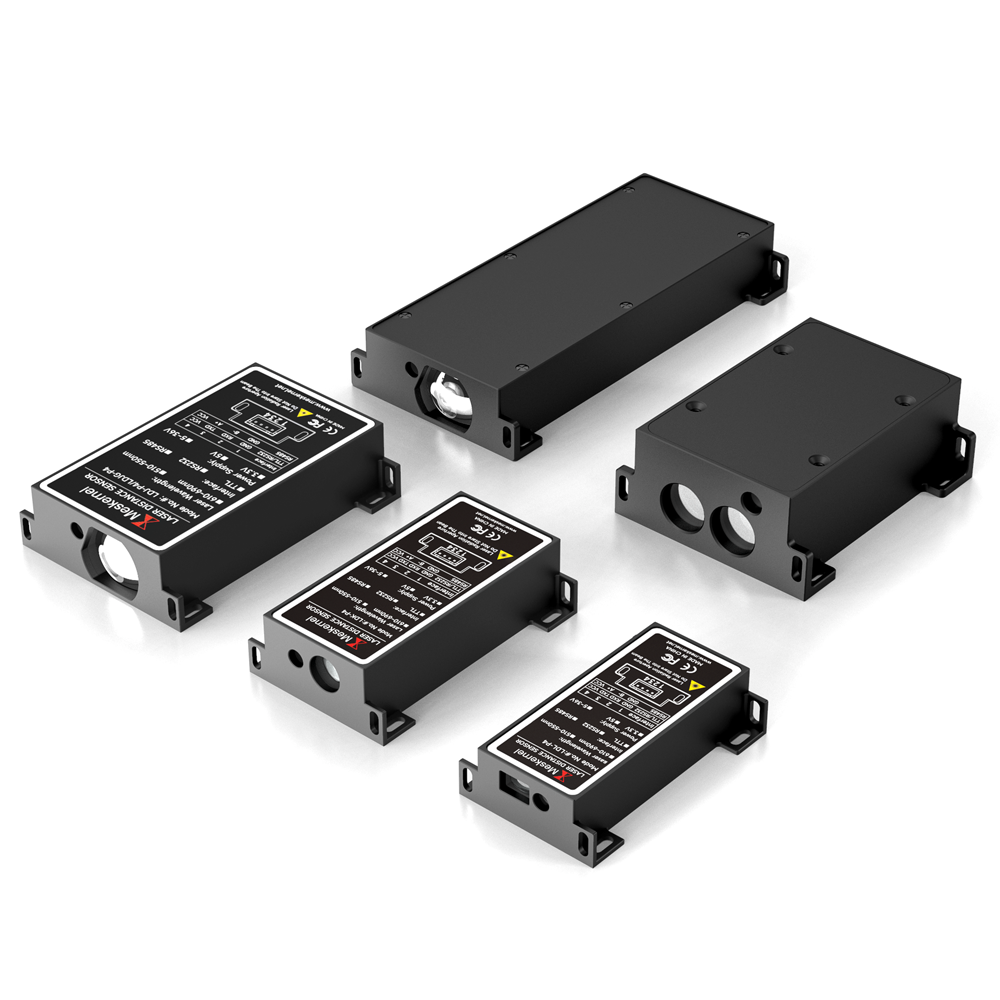
5. Recommended Sensor: TS Series Industrial Laser Distance Sensors
Our TS series industrial laser distance sensors are designed specifically for forklift and automation scenarios.
Key features include:
-
Measurement distance: up to 200m
-
Accuracy: ±1–3mm
-
Frequency: up to 100Hz
-
IP67 protection design for harsh environments
-
Multiple communication interfaces (RS232/RS485/TTL/Can)
-
Suitable for forklift safety systems, AGV forklifts, warehouse automation, and more
These sensors provide a reliable and cost-effective alternative to high-priced brands and can be integrated easily into existing forklift platforms.
6. Conclusion
As warehouse automation becomes the global trend, laser distance sensors for forklifts are becoming a standard tool for improving operational efficiency, reducing accidents, and enabling intelligent logistics management. Whether used for collision avoidance, pallet positioning, or autonomous navigation, laser sensors offer unmatched performance and reliability.
Companies looking to upgrade their forklift systems can significantly benefit from adopting high-precision industrial laser distance sensors in their automation roadmap.