

Laser Distance Sensor for Accurate Water Level Measurement
Introduction to Water Level Measurement
Monitoring water levels is essential in applications such as reservoirs, rivers, flood control, industrial tanks, and environmental monitoring. Traditionally, ultrasonic sensors are widely used for non-contact water level measurement. They work by sending sound waves to the water surface and calculating the distance based on the echo. However, ultrasonic sensors often face challenges such as signal disturbance from waves, temperature variations, or humidity interference.
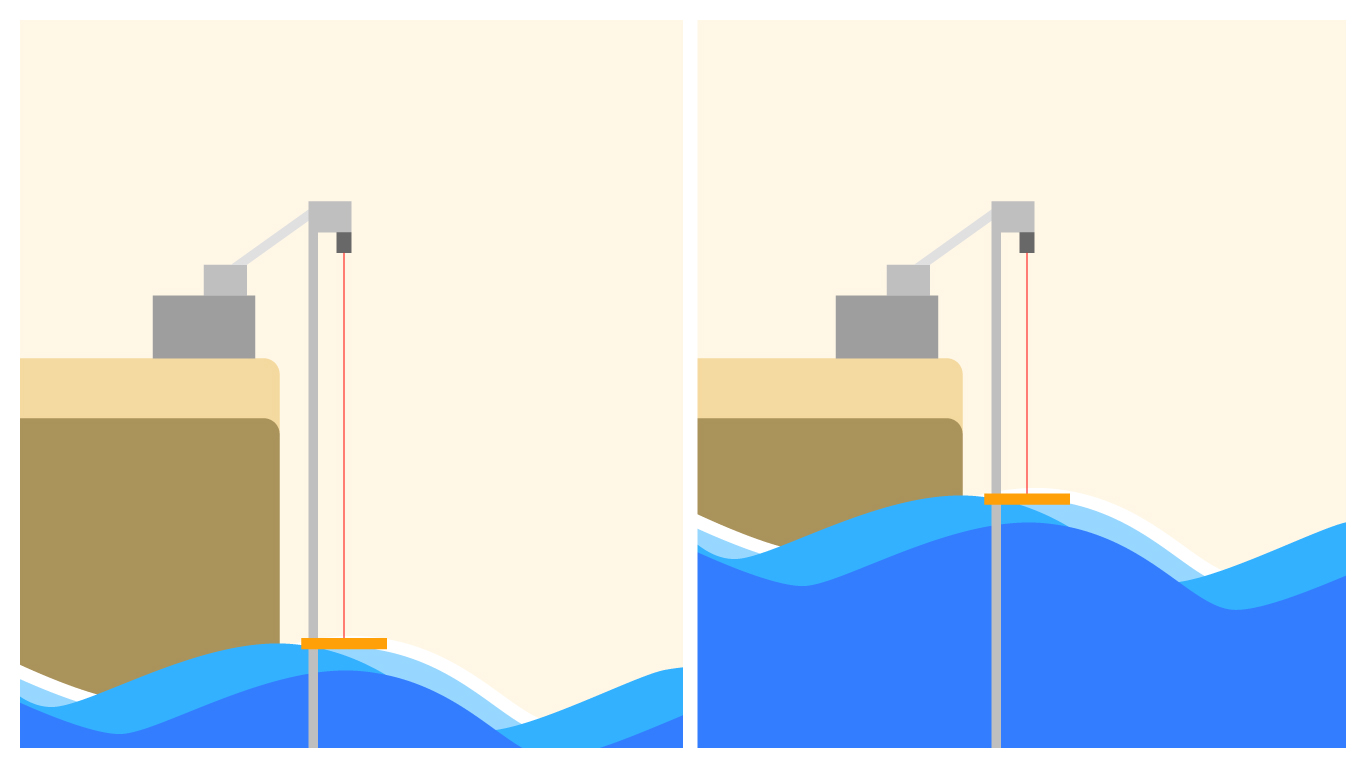
To improve accuracy and reliability, an alternative method uses laser distance sensors with a reflector plate floating on the water surface, as shown in the image above. This technique eliminates many of the weaknesses of ultrasonic systems.
How Laser Distance Sensors Work in Water Level Monitoring
A laser distance sensor emits a laser beam towards a floating reflector plate placed on the water. The sensor then calculates the distance based on the time or phase shift of the reflected beam. Because the reflector provides a stable and consistent surface, the laser can deliver highly accurate and repeatable results even when water waves or turbulence are present.
This setup ensures that the measurement is not directly affected by water surface irregularities, which can distort ultrasonic signals.
Advantages of Laser Distance Sensors Over Ultrasonic Sensors
-
Higher Accuracy – Laser distance sensors can achieve millimeter-level precision, while ultrasonic sensors typically have centimeter-level accuracy.
-
Stable Measurement – The reflector plate provides a reliable target, reducing errors from water movement, foam, or splashes.
-
Faster Response Time – With measuring frequencies up to 100Hz, laser sensors offer real-time water level monitoring.
-
Environmental Resistance – Laser distance sensors are less influenced by temperature changes, humidity, and acoustic disturbances compared to ultrasonic sensors.
-
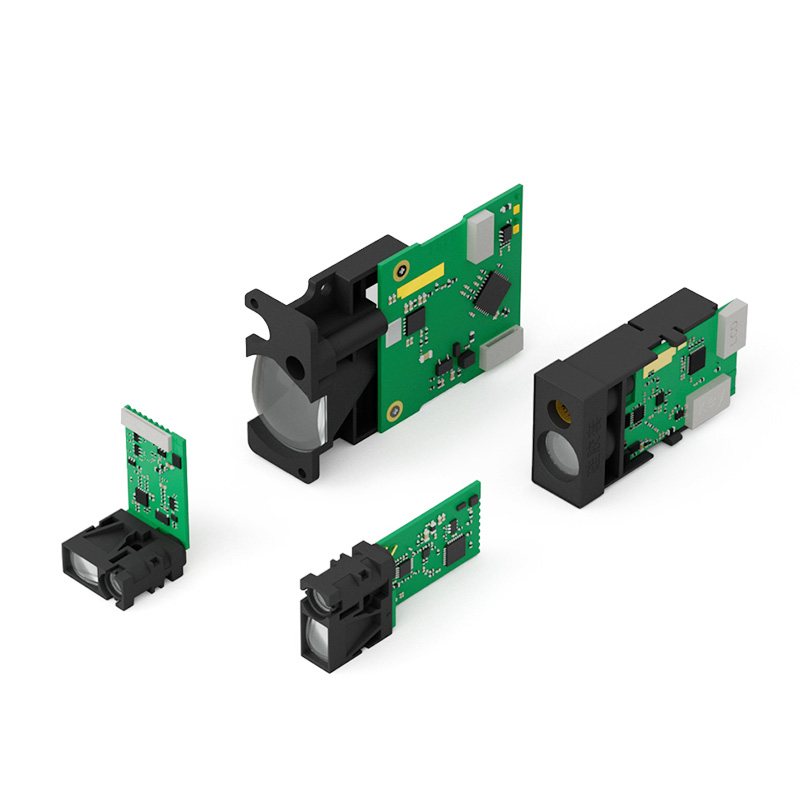
Compact and Easy Integration – Small form factor laser modules can be easily installed in industrial systems, IoT monitoring stations, or remote water level monitoring projects.
Applications of Laser-Based Water Level Measurement
-
Hydropower stations – monitoring reservoir water levels with precision.
-
Flood warning systems – providing real-time, high-accuracy measurements.
-
Industrial liquid tanks – ensuring stable process control.
-
Agriculture and irrigation – monitoring canal and reservoir levels.
-
Environmental monitoring – collecting long-term water level data for research.
Conclusion
While ultrasonic sensors remain common in water level measurement, laser distance sensors with a floating reflector plate provide a superior solution where high precision and reliability are required. With advantages such as millimeter accuracy, fast response, and stable performance in challenging environments, laser sensors are increasingly adopted in water resource management, industry, and environmental applications.
At Meskernel, we specialize in advanced laser distance sensors designed for industrial and environmental monitoring. Contact us to learn more about integrating our laser technology into your water level measurement projects.