

Laser Rangefinder Sensor for Drone Systems: Precision from the Sky
Meskernel, a professional manufacturer specializing in laser measurement technology, provides advanced laser rangefinder sensors and LRF modules optimized for drone integration. With customizable performance and compact design, these sensors are enabling new possibilities in aerial surveying, environmental monitoring, logistics, and defense applications.
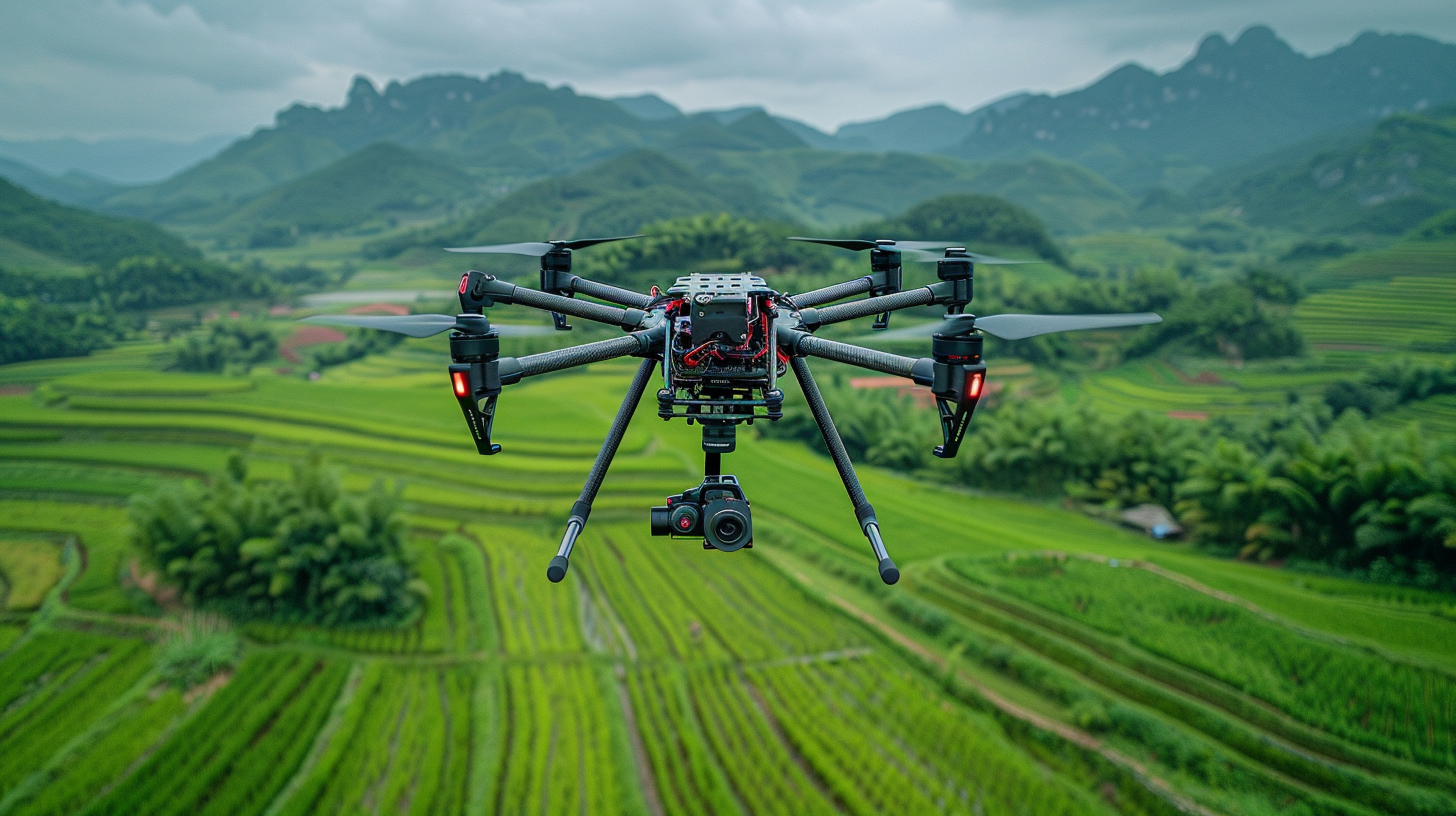
Why Drones Need Laser Rangefinder Sensors
Modern drone operations demand both precision and efficiency. GPS alone cannot provide real-time micro-distance accuracy, especially in complex terrains or when avoiding obstacles. That’s where the laser rangefinder sensor plays a vital role.
By emitting a laser beam and analyzing the reflected signal, these sensors accurately calculate distance, altitude, or target position — enabling drones to:
-
Measure distance between drone and ground or target surface
-
Support automatic landing and obstacle avoidance
-
Generate accurate topographic or 3D mapping data
-
Control flight stability and maintain fixed altitude
-
Assist target tracking and range detection in defense or inspection use
Unlike other sensors, such as ultrasonic or infrared, laser rangefinders maintain high accuracy even under sunlight, long range, and varying reflectivity.
Meskernel LRF Module: Designed for Aerial Integration
Meskernel’s LRF module is specifically engineered for drone applications, combining long-range detection with ultra-lightweight construction.
Key Features for Drone Integration
-
Range Capability: From 100 m up to 4000 m, depending on the optical configuration and laser wavelength.
-
Accuracy: 0.5–1 m typical, ensuring reliable performance in flight.
-
Compact Size: Modules can be as small as 35 × 25 × 15 mm, minimizing payload impact.
-
Weight: Less than 30 g, ideal for drones with strict weight requirements.
-
Laser Indicator: Optional visible aiming beam (<1 mW, Class 1 safe) for calibration or targeting.
-
Communication Interface: UART, RS232, or RS485 available for seamless data transmission.
-
Power Efficiency: Low power consumption for longer flight time.
Each laser rangefinder sensor or LRF module is tested for vibration resistance, temperature stability, and electromagnetic compatibility — critical factors for airborne operation.
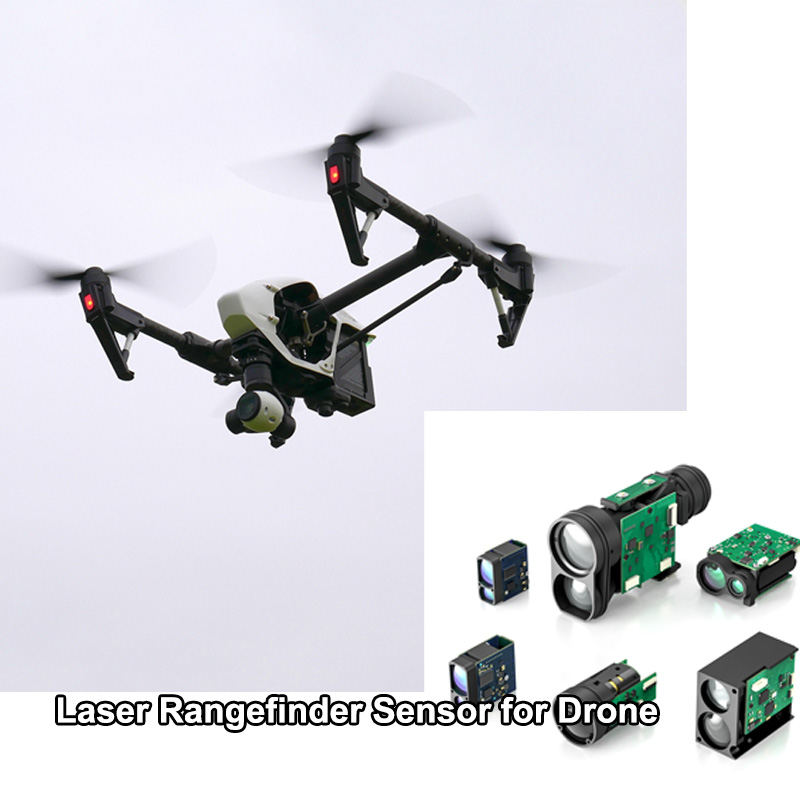
Applications of Laser Rangefinder Sensors on Drones
1. Aerial Mapping and 3D Modeling
When combined with GPS and LiDAR systems, laser rangefinder sensors enable drones to generate high-resolution 3D maps. The precise distance data enhances the accuracy of elevation models, construction monitoring, and land surveying.
2. Environmental and Forestry Monitoring
Drones equipped with Meskernel’s LRF modules can measure tree heights, canopy density, or terrain profiles. The lightweight sensor allows continuous flight for environmental studies and resource management.
3. Power Line and Infrastructure Inspection
Laser rangefinder sensors help drones maintain safe flight distances from power lines, towers, and bridges. The data ensures both equipment safety and structural accuracy in inspections.
4. Defense and Security Applications
For surveillance drones, long-range laser rangefinder sensors provide distance-to-target measurements, helping operators estimate movement, altitude, or threat distance with real-time precision.
5. Agricultural and Logistics Drones
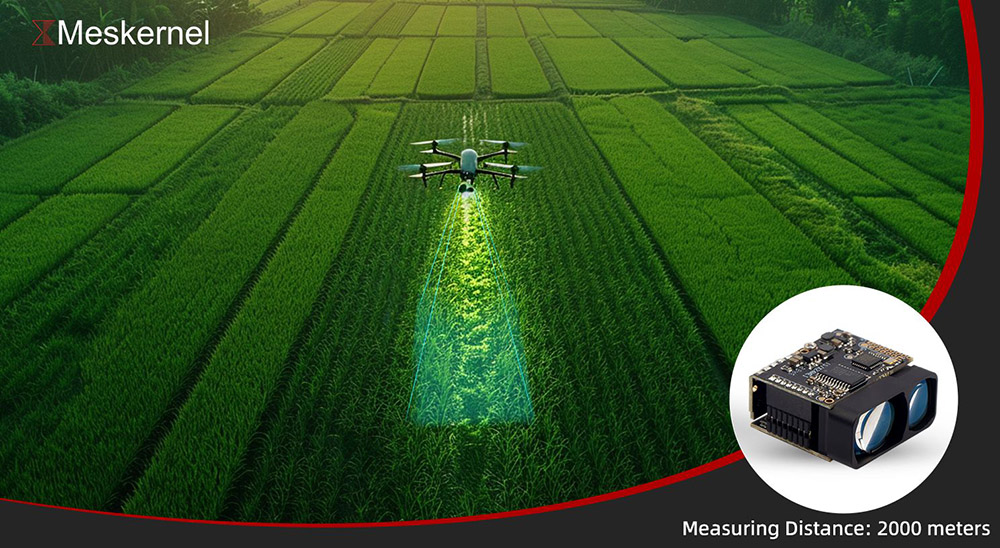
In precision agriculture, laser rangefinders enable accurate terrain following and spraying control. In logistics, they help drones detect delivery drop zones and ensure safe cargo release.
Customizable OEM Options for Drone Manufacturers
Meskernel understands that drone manufacturers often have unique technical and design needs. That’s why our laser rangefinder sensor OEM service allows full customization of:
-
Range and accuracy according to mission requirements
-
Output interface (UART/RS232/RS485/Modbus)
-
Power and wavelength (905 nm or 1535 nm, eye-safe options)
-
Signal output format (digital or analog)
-
Structure and mounting design to fit specific drone platforms
Through close collaboration, Meskernel helps drone system integrators achieve optimal performance while reducing development time.
Advantages of Meskernel Drone Laser Rangefinder Technology
-
Lightweight & Compact: Ideal for small UAVs with limited payloads.
-
Long-Range Capability: Detects targets up to several kilometers away.
-
High Precision: Stable accuracy even under complex environmental conditions.
-
Low Power Consumption: Extends flight endurance.
-
Flexible Customization: From firmware to mechanical housing.
By combining optical precision with digital flexibility, Meskernel ensures reliable distance measurement solutions for every drone model.
The Future of Drone-Based Distance Measurement
As drone applications expand into delivery, infrastructure inspection, and environmental data collection, the demand for laser rangefinder sensors and LRF modules will continue to grow. The next generation of UAVs will require sensors that are smaller, smarter, and more adaptive to environmental changes.
Meskernel continues to invest in R&D, improving sensor stability, signal processing algorithms, and integration compatibility — empowering drone manufacturers to push the boundaries of aerial measurement technology.
Partner with Meskernel
Whether you are developing a professional mapping UAV or an industrial inspection drone, Meskernel provides the reliable laser rangefinder sensor and LRF module solutions you need.